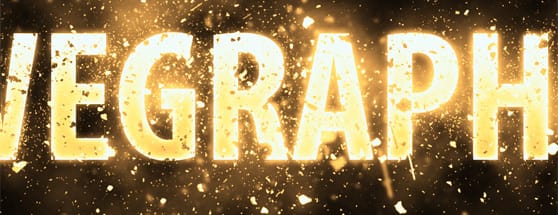
Create a Dynamic Particle Explosion in Photoshop
 I think you'll be surprised how easy this effect is to create. Lets dive in...
Step 1
Create a blank document 2400x1200 at 300dpi with a background color set to #191919. Choose a bold heavy font and enter some white text of your choice. Apply the following layer styles to your text.
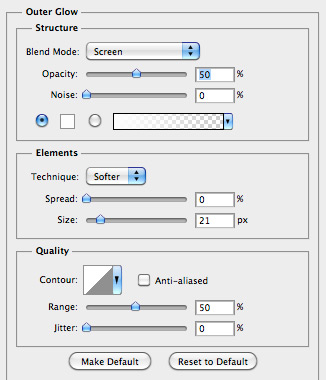
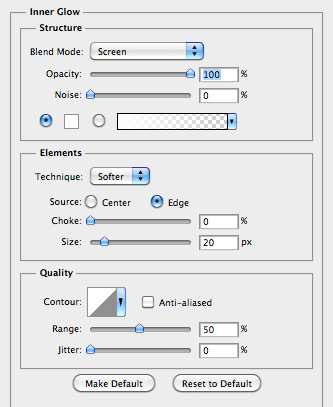
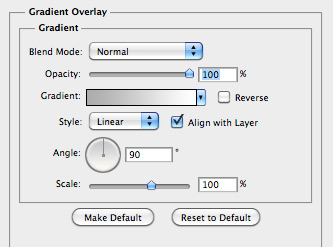
Step 2
Press the letter (D) on your keyboard to reset your colors to black and white. On a new layer, above your text, render some clouds (Filter | Render | Clouds).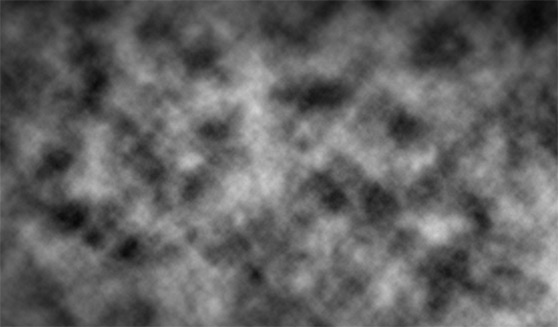 Set this layer's blending mode to Overlay.

Step 3
Now load the Dust Particle brushes from your brush palette. On a new layer, using a white brush, begin clicking to place some of the particles around your text. Choose different brushes, and size them down accordingly.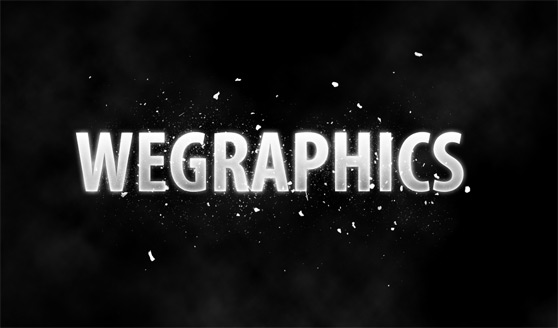 On a new layer use another particle brush, sized a bit larger than the others, and then apply a (Filter | Blur | Gaussian Blur) to make it appear as though some of the particles are too close to the camera to be in focus.
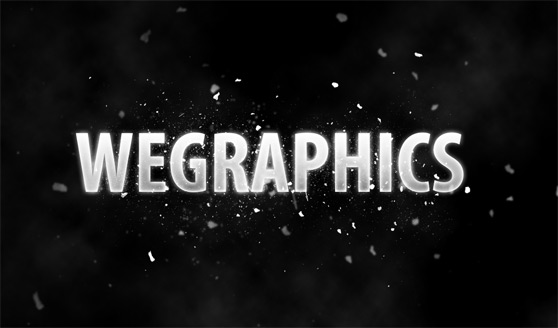 This brush set makes the previous step incredibly easy. Drawing and placing these particles individually would have taken a considerable amount of time.
Step 4
Now lets rasterize our type. (Ctrl+click) the type layer and select "Rasterize Type" from the drop down. Now we can use one of the particle brushes as an eraser to remove pieces of the type to make it appear like pieces of broken off.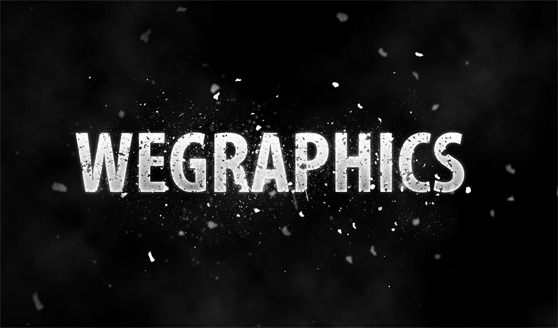
Step 5
Lets add a Gradient Map adjustment layer and use a gradient similar to the one below.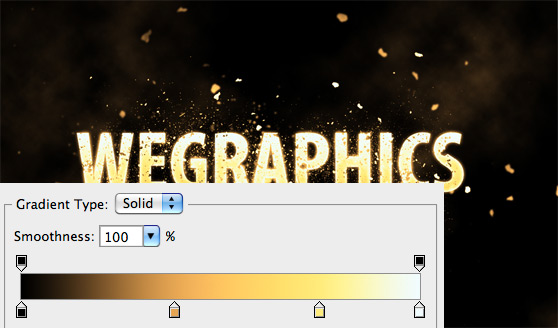 Now, on a new layer, below the text, use a large soft white brush with opacity set to around 10-20% to paint a bit of light behind the text. Set this layers blending mode to Linear Dodge (Add).
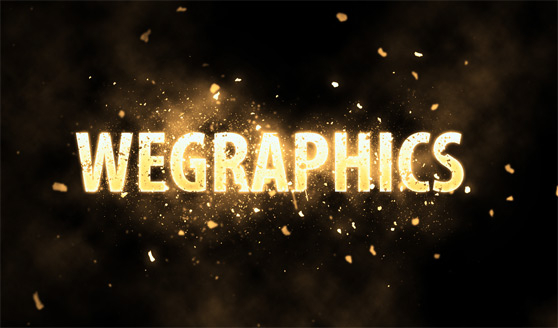 I hope this tutorial has shown you some new techniques, and how custom brushes can create impressive effects in just a few clicks.
Here's a view of the effect at 100% zoom.
I hope this tutorial has shown you some new techniques, and how custom brushes can create impressive effects in just a few clicks.
Here's a view of the effect at 100% zoom.
More from Tutorials
How to Easily Remove Smoke From The Background in Photoshop
Tutorialsby Diego Sanchez
Smoke images can be used in a wide range of applications across various designs, such as adding drama to a photograph, crafting captivating visual effects on posters, or even giving your artwork a mysterious halo. Whichever the case, transparent smoke can serve as a powerful tool in your arsenal. So today, I will show you how easy it is to remove the background from a smoke image, and in the process, prepare the file to change the smoke color at any time you want, allowing you to seamlessly integrate it into your projects.
Read more
Easily Make a Glass Texture Effect in Photoshop
Tutorialsby Diego Sanchez
The glass effect has been used by many designers and photographers to add depth and dimension to their compositions with a touch of modern elegance. There are, of course, many different ways to apply a glass effect in Photoshop, but today I will show you how easy it is to make your own glass texture and apply realistic distortion to any of your images using nothing but the default Photoshop tools.
Read more
How to Easily Make Your Vector Digital Signature
Tutorialsby Diego Sanchez
In today's digital life, whether you are a freelancer, a business owner, or simply someone who frequently engages in digital transactions, having a well-crafted digital signature is almost indispensable to add a touch of authenticity and credibility to your documents. So today, I will show you how easily you can make your own vector digital signature in Illustrator for you to sign your digital documents or incorporate it into any design work.
Read more
Easily Make an Editable Grunge Text Effect in Photoshop
Tutorialsby Diego Sanchez
There are different ways to make a grunge text effect in Photoshop while keeping your text fully editable, and the most known one is to use a texture as a layer mask to hide part of the text. But Today I will show you a differnt approach on how you can make this kind of effect, while keeping you text fully editable and at the same time give you a bit more control over that effect by using a texture in a new layer (instead of a layer mask) that you can later move, scale, replace or combine with other textures without replacing any kind of layer mask.
Read more